
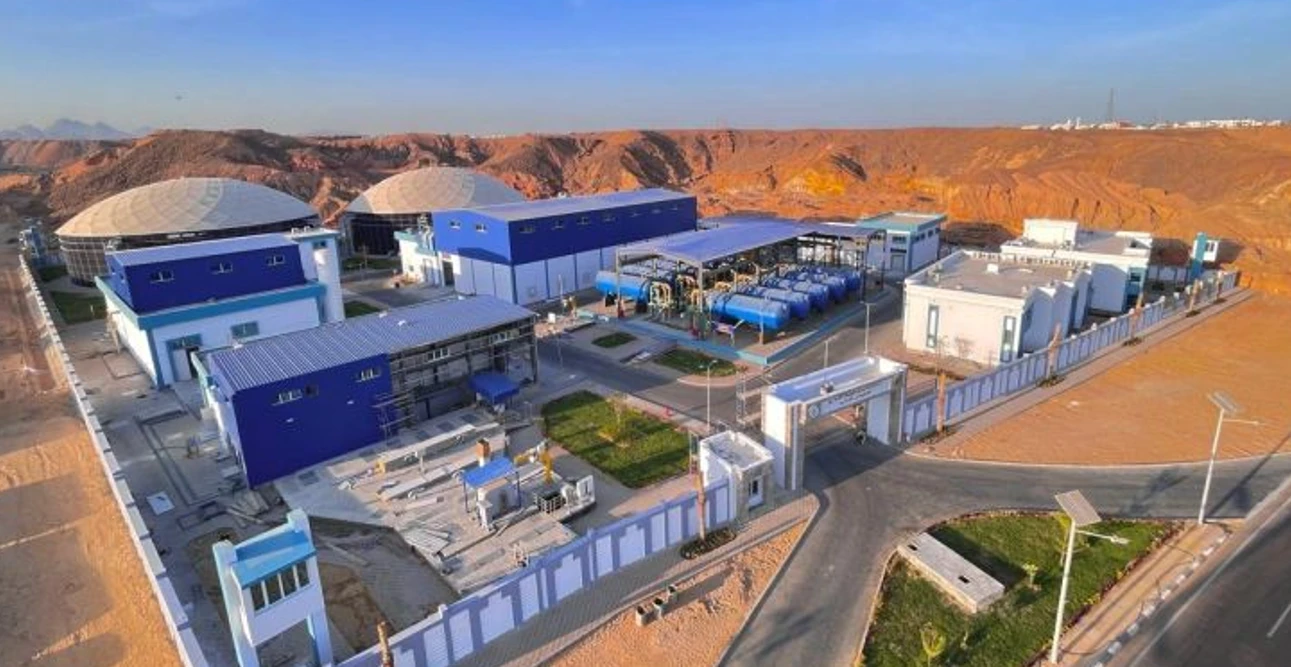
Sharm El-Sheikh SWRO Desalination Plant – 60,000 m³/d – South Sinai, EGYPT

Project description

Sharm El-Sheikh Seawater RO Desalination Plant employs advanced Reverse Osmosis (RO) technology to convert seawater into clean, reliable drinking water. With an initial capacity of 30,000 m³/day and expandable to 60,000 m³/day, the project supports the growing demand for potable water in Sharm El-Sheikh city.

The plant is composed of several core components, including the seawater intake system, pre-treatment units, high-pressure pumping systems, and energy recovery devices that improve operational efficiency. Its main desalination function is performed by the RO membrane system, followed by post-treatment and remineralization to meet water quality standards. The facility also includes product water storage and pumping systems, a dedicated brine discharge system, and essential power supply, SCADA, and utility infrastructure to support continuous and reliable operation.

Project Owner

Egyptian Armed Forces Engineering Authority

Contractor

Metito, Orascom joint venture (JV)

EcoBusiness Scope

         Regulatory Review: Confirm full compliance with all environmental laws, including Law 4/1994.

         Regulator Engagement: Proactively consult with EEAA & SPA to clarify approval conditions.

         Pipeline Screening: Assess intake and outfall designs for environmentally compliant options.

         Physical Baseline Study: Analyze site topography, geology, soils, and groundwater; create maps.

         Geological Mapping: Conduct field surveys to map surface rock and soil profiles.

         Marine Survey: Perform ecological surveys along a 300m shoreline to document habitats and species.

         Land Survey: Assess flora, fauna, and habitats using low-impact methods; create habitat maps.

         Flood Risk Assessment: Map flood hazards using topography and climate data; recommend mitigation.

         Brine Modeling: Model brine dispersion using Delft software and site-specific marine data.

         Social Impact Scoping: Profile local communities and identify potential project effects.

         Air Quality Baseline: Monitor baseline levels for key air pollutants and particulate matter.

         Seawater Baseline: Sample and test seawater to establish baseline quality conditions.