
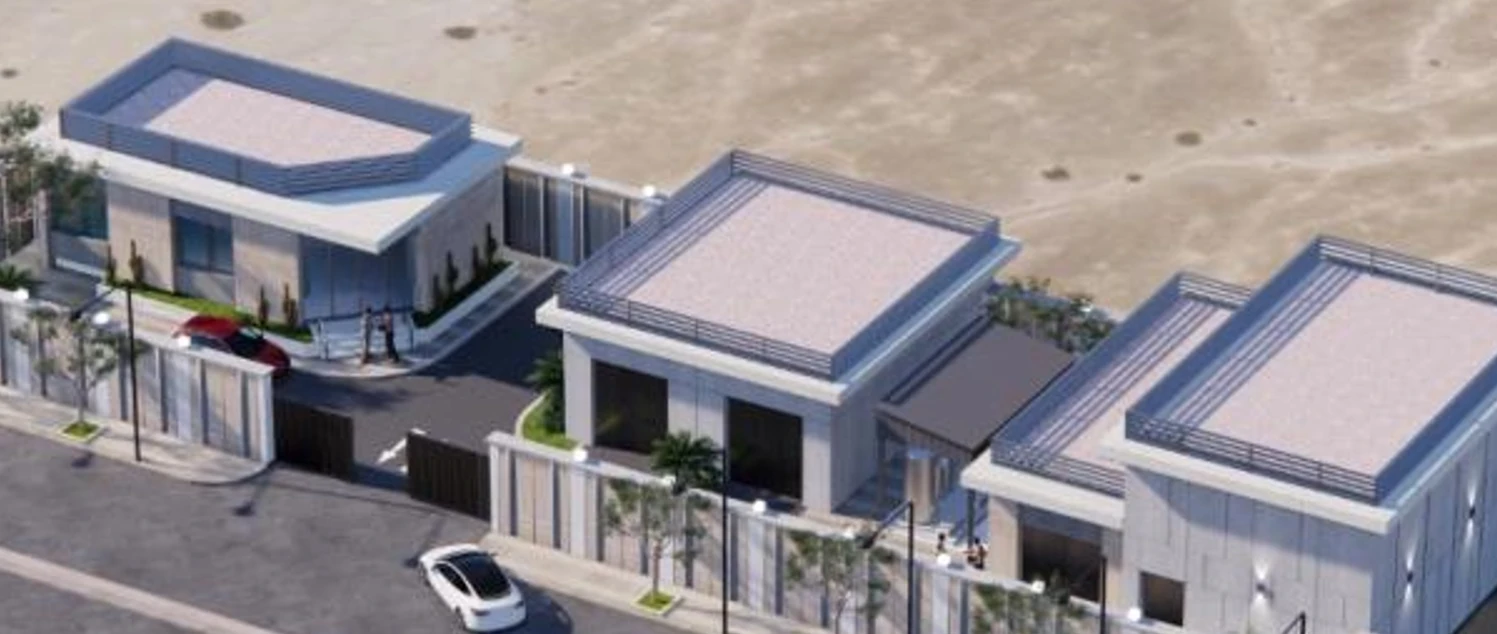
Sharm El-sheikh “Nabq” SWRO Desalination Plant – 12,000 m³/d - South Sinai, EGYPT

Project description

As part of development projects in South Sinai Governorate, and in response to the region's water scarcity, the Nabq desalination plant was constructed with a capacity of 12,000 cubic meters per day in the Nabq area of Sharm El Sheikh, South Sinai Governorate, to provide a continuous supply of fresh water to the region. The Nabq plant utilizes reverse osmosis technology and is situated on approximately 20,000 square meters, about 3 kilometers from the shoreline and approximately 80 meters above sea level. The plant's main systems and stages are the marine pipeline system (suction head, intake line, pumping station, discharge line, diffuser), pretreatment, reverse osmosis stage, post-reverse osmosis treatment, produced water tanks, brine disposal system, electrical power feeding and control system, auxiliary units and systems (internal piping, hoists and cranes, storage, etc.)

Project Owner

Egyptian Armed Forces Engineering Authority

Contractor

DESALIA, S.L. - TAM Environmental services

EcoBusiness Scope

Regulatory, Physical & Ecological Baseline

         Reviewed all applicable environmental laws (incl. Law 4/1994) to ensure full compliance.

         Conducted early consultations with EEAA and SPA to confirm approval conditions.

         Assessed physical environment: topography, geology, geomorphology, and groundwater.

         Performed field geological surveys and developed detailed environmental maps.

         Completed marine ecology surveys and terrestrial flora–fauna assessments with habitat mapping.

Environmental Sampling & Socioeconomic Assessment

         Monitored baseline air quality and particulate levels using standard analytical equipment.

         Conducted seawater quality sampling at key shoreline and offshore stations.

         Evaluated socioeconomic conditions: population, services, and community livelihoods.

Hazard Analysis & Hydrodynamic Modelling

         Performed flood risk assessment using topography, drainage analysis, and climate data.

         Reviewed intake and outfall pipeline options to identify environmentally compliant alternatives.

         Developed advanced brine dispersion modelling using CORMIX (near-field) and Delft3D (far-field) to simulate dilution and long-term salt distribution.