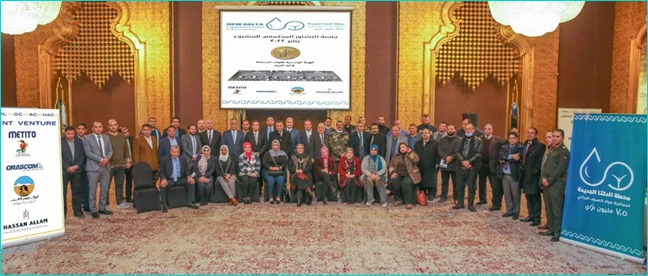
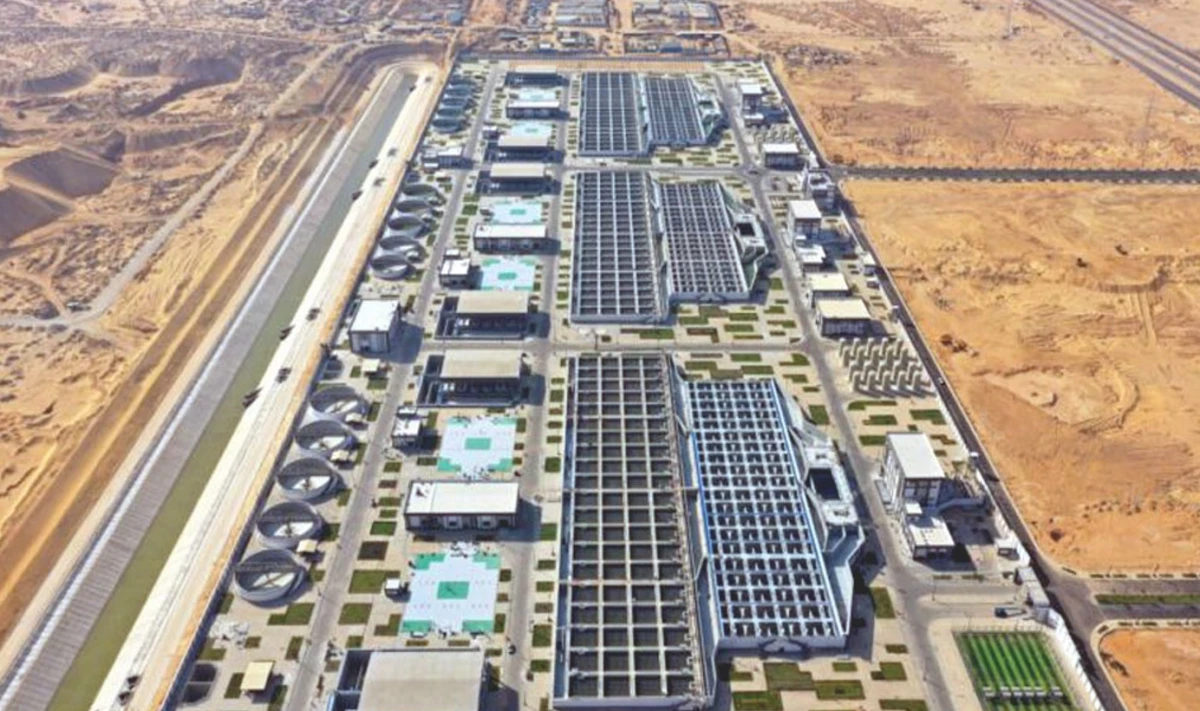
The plant has a capacity of 7.5 million m3/day, the largest of its type in the world and the treated water will irrigate up to 2,266,000 acres west of the Nile Delta area. The plant receives the wastewater gathered in the north of Delta from the agricultural drainage, through digging a 120 kilometeres pathway connecting the two points.
The project’s main objective is to reclaim and cultivate 500.000 feddans in West Delta within the framework of the national’s strategy to expand the agricultural area, develop the Western Desert Region, and form new agricultural and population communities depend on agricultural production and industrialization.
The New Delta Treatment Plant also aims on a strategic scale to remove pollution from Marriout Lake and the Mediterranean Sea coast in Alexandria and, in parallel, cultivate an area characterized by the quality of arable land and the subsequent development activities in all fields.
This iconic national project is part of the state’s strategy to expand Egypt’s agricultural area, develop the West Delta region, and to create new sustainable communities and will have a myriad of positive economic and social impacts in EGYPT and beyond.
Ministry of Defence - Armed Forces Engineering Authority
JV Metito, Orascom Construction, Arab Contractors, and Hassan Allam
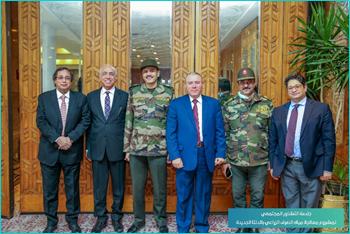
EcoBusiness For Project Management delivered a comprehensive and strategically structured scope of work that integrated environmental stewardship with development objectives. The assignment began with a full Environmental and Social Impact Assessment grounded in national legislation and aligned with international benchmarks. The team reframed the project’s technical definition—covering intake infrastructure, treatment technology, conveyance systems, sludge handling, and final discharge options—while undertaking extensive baseline surveys that captured climatic patterns, land-use dynamics, hydrology, ecological attributes, and community sensitivities. Anticipated impacts across construction and operational phases were modelled in detail, forming the basis for sophisticated mitigation, monitoring, and contingency frameworks.
A parallel stream of work focused on water, hydrology, and hydrogeological systems that underpin the long-term performance of drainage-water reuse. EcoBusiness characterized raw water quality along the entire collection and conveyance route, analysed seasonal flow variations, and investigated groundwater–surface water interactions within the reclaimed lands. Advanced study was used to predict the behaviour of treated flows within irrigation canals and agricultural command areas, ensuring that the system performs reliably under varying hydrological conditions. These assessments were complemented by soil and agricultural studies, including evaluations of soil chemistry, permeability, salinity levels, and crop-water requirements to confirm the suitability of large-scale land reclamation.
Recognising the complexity of the project’s ecological setting, EcoBusiness executed detailed terrestrial and aquatic biodiversity surveys, mapping habitats and identifying species of environmental significance across the broader footprint. The consultancy assessed risks to aquatic communities within drains and canals, as well as potential interactions with nearby coastal ecosystems. From these insights, the team proposed nature-positive measures such as habitat enhancement, buffer zones, and targeted protection strategies that safeguard biodiversity while supporting sustainable agricultural expansion.
EcoBusiness also addressed all atmospheric, social, and operational dimensions of the project. Baseline air quality, noise, and odour assessments were followed for emissions from construction activities, generators, sludge drying facilities, and chemical handling areas. Social specialists conducted an in-depth socioeconomic appraisal, identifying community dynamics, vulnerable groups, land-use implications, and access considerations. Through structured engagement with farmers, irrigation authorities, local administrations, and community representatives, the team developed a Stakeholder Engagement Plan and grievance mechanism that ensured transparent communication throughout the project lifecycle.
The assignment was completed with a suite of management plans and compliance deliverables that positioned the client for permitting and long-term operational excellence. EcoBusiness prepared the Environmental and Social Management Plan, monitoring protocols, and regulatory reporting systems, together with comprehensive sludge, waste, and chemical-handling procedures. Health, safety, and emergency-response strategies were formulated to mitigate operational risks, while cumulative impact assessments and climate-resilience analyses ensured that the project remains robust in the face of regional development pressures and future climate scenarios. The consultancy provided full regulatory support, including preparation of EEAA submissions and technical responses, ensuring that the project achieved environmental clearance with a strong foundation for sustainable implementation.