
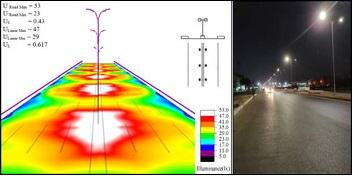
The Egypt National Energy Efficiency in Street Lighting Program (2020) is a nationwide government initiative designed to modernize Street lighting infrastructure and reduce the sector’s historically high electricity consumption. The program targets the replacement of about ~ 4 million conventional street lamps with energy-efficient alternatives, shifting from older high-pressure sodium units to advanced LED and solar-powered systems. Led jointly by the Ministry of Electricity and Renewable Energy, the Ministry of Local Development, the Ministry of Finance, and the Arab Organization for Industrialization, the program aims to generate major national benefits, including annual savings of EGP 3 billion and freeing roughly 900 MW of generation capacity.
Initially funded with EGP 260 million, the program underwent a dedicated evaluation (Project #75645) to assess progress, identify implementation challenges, and propose measures to accelerate full completion.
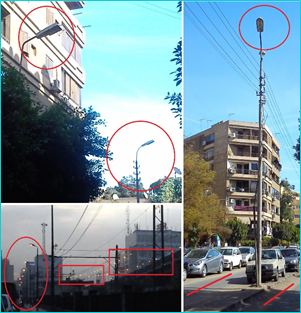
The main objective of this assignment “Project #75645” was to assist the Egyptian Government in assessing the performance of the programme to date, diagnose the challenges faced, in light of which recommend mechanisms to expedite the successful implementation of the Energy Efficient Street Lighting Programme by 2020. The tasks included in this assignment were as follows:
‒ Devise and conduct a field survey of street lighting Cairo and Giza Governorates;
‒ Prepare technical report assessing the progress and impact of the Energy Efficient Street Lighting Programme since inception, and providing recommendations based on findings for successful implementation of the Project by 2020. The report covered the program as implemented in five governorates and included the following components;
‒ Assessment of the energy efficient street lighting programme: progress since project commencement, challenges and barriers, effectiveness in terms of energy and cost savings, sustainability, capacities of involved parties, etc.
‒ Situational Analysis of the existing regulatory, legislative, technical, organizational, procurement, operation and maintenance frameworks governing street lighting, including identification of gaps, opportunities for saving electricity.
‒ Stakeholder analysis: Identification of primary stakeholders, assessment of their roles and responsibilities in implementation of the project. Capacity, financial and HR gaps that may pose as barriers to successful implementation. Identify and recommend capacity building and trainings that may be needed.
‒ Case studies of energy efficient street lighting programmes implemented globally that could be applied in Egypt.
‒ Detailed recommendations on any alterations and re-designing of project implementation plan based on global examples as captured in the case studies, survey findings, stakeholder analysis, and assessment of existing project. The recommendations covered:
‒ Measures for legislative, regulatory, institutional reforms, innovative financial mechanisms, capacity building needs, etc.
‒ A procurement guiding framework for municipalities to facilitate purchase of energy efficient street lighting systems in accordance to Egyptian government laws and regulations and based on best practices in similar projects in other countries.
‒ A proposal for collection and recycling system for the removed inefficient lamps.
‒ The results and analysis of the findings of the field survey.