
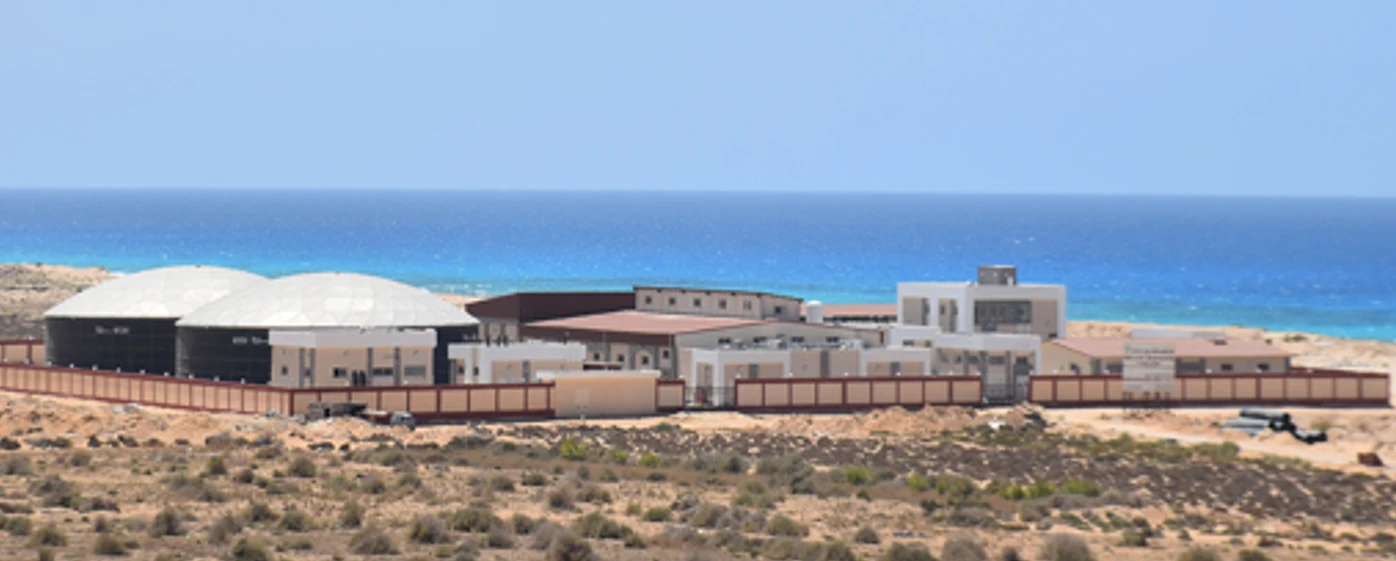
Dabaa seawater RO desalination plant is located in Dabaa city, North coast, EGYPT and developed to supply potable water matching the international water quality standards to approximately 200,000 inhabitants. Developed over an area of 40,000 square meters, equivalent to 10 acres, the project includes a seawater intake and three tanks, each with a capacity of 10,000 cubic meters, including a tank for brackish water and a tank for desalinated water.
The plant includes a RO desalination unit, complete with electrical control rooms, a pump building for the produced water, a generator and transformer building, and the internal network connecting the project units, which includes the supply of brackish water and the discharge of highly saline water, in addition to administrative buildings.
Egyptian Armed Forces Engineering Authority
DESALIA, S.L. - TAM Environmental services