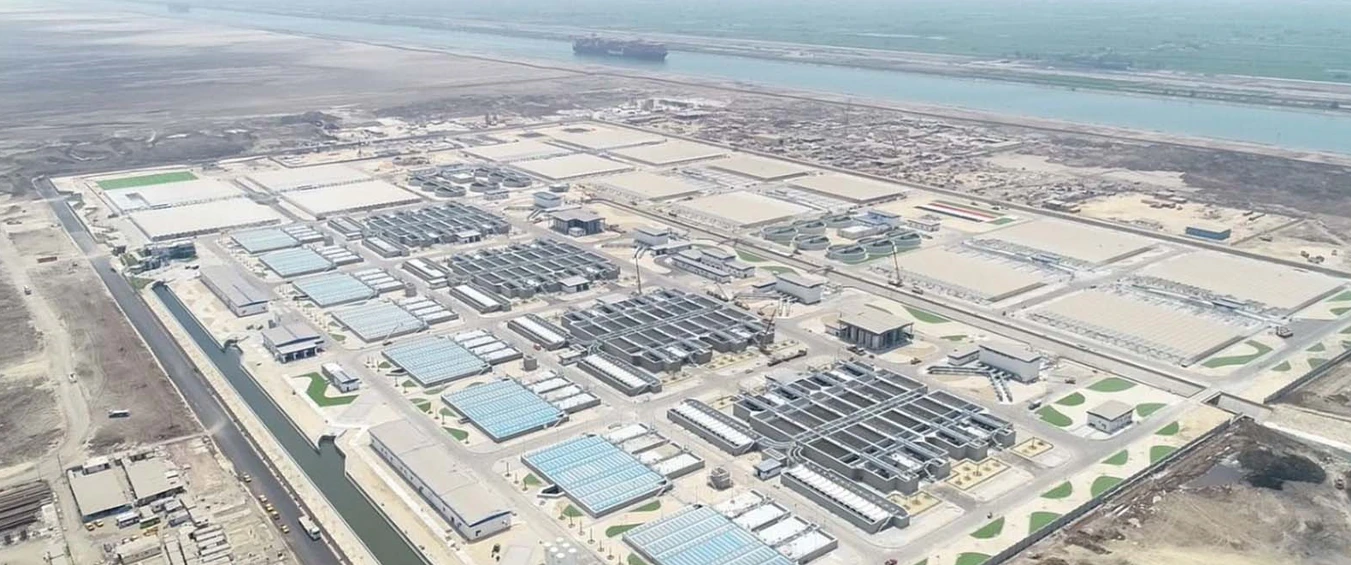
Located south of Port Said city and extending toward the eastern side of the Suez Canal, Bahr El-Baqar Wastewater Treatment Plant is a flagship national project designed to support Sinai’s agricultural expansion. By redirecting and purifying mixed agricultural, industrial, and municipal drainage water, the facility enables the reclamation of nearly half a million feddans across the region. With a treatment capacity of 5.6 million m³/day, the plant plays a pivotal role in transferring water from the western to the eastern bank of Suze Canal through the existing siphons and delivering high-quality irrigation water to Sheikh Jaber Canal.
Occupying roughly 155 feddans, the complex is structured around four identical treatment modules, each capable of processing 1.4 million m³/day. Its integrated system includes an intake canal, advanced sedimentation and filtration units, chemical dosing facilities, disinfection stages, and extensive sludge-handling infrastructure. The process follows a clear sequence—from initial screening and pumping, to coagulation and sedimentation, followed by precision disc filtration and ozone or chlorine disinfection. This streamlined configuration ensures that suspended solids are efficiently removed and that treated water meets strict agricultural reuse standards.
Supporting utilities such as chemical storage, generator buildings, workshops, and administrative facilities enable continuous large-scale operations. The plant also manages around 460,000 tons of hydrated sludge annually through mechanical and solar drying systems. Recognized by Guinness World Records as the largest wastewater treatment plant of its type, Bahr El-Baqar stands as a cornerstone environmental intervention, mitigating pollution along the Bahr El-Baqar drain and restoring ecological balance while supplying more than two billion m³ of treated water each year for sustainable land development.
Ministry of Defence - Armed Forces Engineering Authority
Joint venture Orascom Construction and Arab Contractors
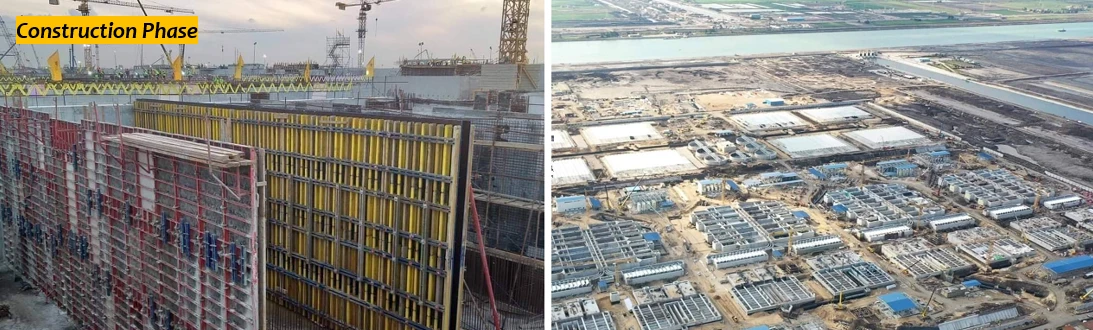
EcoBusiness For Project Management began its engagement by preparing a comprehensive Environmental and Social Impact Assessment (ESIA) for the Bahr El-Baqar Water Reuse Plant, one of the largest water reclamation facilities in the world. The consultancy services commneced with baseline studies covering air quality, noise levels, soil conditions, and nearby groundwater systems, along with socio-economic mapping of communities located along the drainage route and within the project footprint. Terrestrial ecological surveys focused on desert vegetation and mobile species such as small mammals and migratory birds, ensuring that construction and operation of the facility would not create unintended ecological pressures. These baseline findings formed the basis for a full impact evaluation and mitigation framework aligned with the Egyptian Environmental Affairs Agency (EEAA) requirements.
A major element of the environmental scope involved detailed drainage-water quality assessments for the Bahr El-Baqar drain, the plant’s sole water source. EcoBusiness collected representative samples across seasons to capture fluctuations in organic loads, salinity, suspended solids, heavy metals, pesticides, and microbial contamination. Based on laboratory results, EcoBusiness team evaluated the level of treatment required to produce safe irrigation-quality water that meets national reuse standards for the Sinai land-reclamation program. This analysis was critical for designing process units capable of treating more than 5.6 million m³/day and ensuring that the final water quality would not pose risks to crops, soils, or farm communities.
EcoBusiness also conducted in-depth air quality, odor, and noise studies due to the scale of construction activities and the large sludge-handling component of the project. Baseline air monitoring around the project area measured particulates, gaseous pollutants, and odorous compounds. EcoBusiness team assessed potential odor generation from sludge digestion, drying beds, aeration tanks, and chemical dosing systems, and then proposed mitigation measures such as biofilters, covers, optimized aeration regimes, and continuous monitoring programs. Noise assessments examined impacts from equipment, heavy vehicles, and pumping stations, with EcoBusiness recommending buffer zones, acoustic insulation, and construction-phase controls.
Soil, groundwater, and land-impact studies constituted another critical section of the environmental scope. EcoBusiness evaluated risks related to seepage, leaks from channels, chemical storage, and sludge management, ensuring that groundwater resources in the region would remain protected. Additionally, EcoBusiness assessed the sustainability of using treated water for irrigation in Sinai, examining potential long-term effects on soil salinity, nutrient balance, and productivity. This ensured that the reclaimed water would support land reclamation efforts without degrading soil quality or causing salinization.
A specialized sludge and waste management plan was also developed to handle the substantial sludge generated by such a large-scale treatment plant. EcoBusiness characterized sludge properties, assessed pathogen content and heavy-metal levels, and evaluated various beneficial reuse options including composting and use as soil conditioner. EcoBusiness team also established protocols for hazardous wastes (e.g., screenings, oils, chemicals), ensuring that both construction and operation stages followed safe and compliant waste-handling procedures.
EcoBusiness complemented these studies with a full Environmental and Social Management Plan (ESMP) that defined monitoring requirements, reporting procedures, emergency response measures, and environmental obligations for contractors. Furthermore, EcoBusiness conducted sustainability and resource-efficiency assessments, evaluating opportunities to reduce energy demand, optimize chemical use, and integrate circular-economy solutions such as sludge valorization and greenhouse-gas reduction strategies. The consultancy ensured full regulatory compliance by coordinating with EEAA and relevant Sinai development authorities, securing required environmental approvals.
Finally, Ecobusiness led the community and stakeholder engagement component of the project, conducting consultations with local residents, landowners, and governmental bodies. This ensured transparency throughout the planning and construction phases, with documented community concerns addressed through targeted mitigation actions. Through this comprehensive environmental and sustainability advisory role, EcoBusiness For Project Management ensured that the Bahr El-Baqar water reuse project was designed and implemented to the highest environmental standards, supporting Egypt’s national goals for water security, land reclamation, and sustainable agricultural expansion in Sinai.