
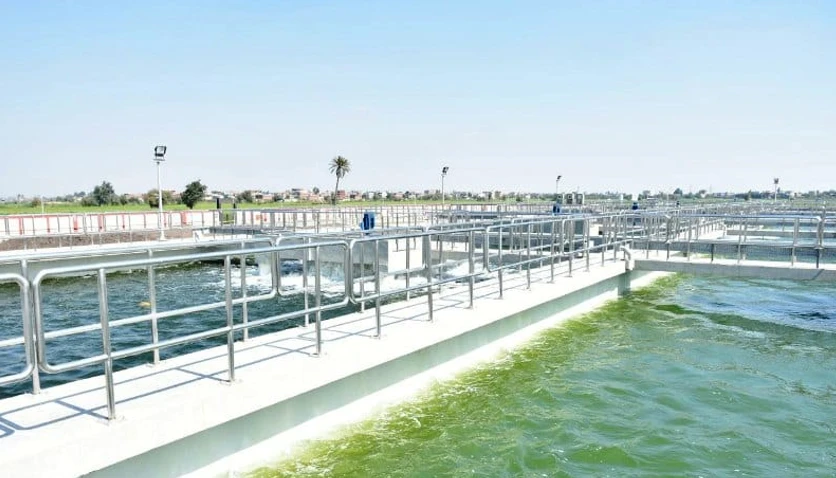
Alsawaleh Wastewater Treatment – 44,000 m³/d - Al Sawaleh, Sharqia Governorate, EGYPT

Project description

The Al-Sawaleh Wastewater Treatment Plant in Sharqia Governorate provides a safe and reliable sanitation facility designed to protect both the environment and public health by treating sewage and returning high-quality effluent to nature, thereby reducing pollution in the Bahr El-Baqar Drain. Implemented as part of Egypt’s broader rural sanitation and water-management enhancement efforts across the Nile Delta, the plant occupies 10 acres and has a total design capacity of 44,000 m³/day, constructed in two phases of 22,000 m³/day each. It operates using the Extended Aeration (EA) method, which activates naturally occurring bacteria by supplying sufficient oxygen, allowing them to efficiently break down organic matter into a stable, odor-free form. The facility integrates a full sequence of treatment and support units—including screening, aerated grit removal, aeration and sedimentation tanks, sludge thickening and storage facilities, chlorination, flow metering, service utilities, and administrative buildings—ensuring effective biological treatment, robust sludge management, and continuous, compliant plant operation.

Project Owner

The Holding Company for Water and Wastewater

EcoBusiness Scope

         Compiled and reviewed all environmental legislation and regulatory requirements relevant to the project to ensure full compliance of the EIA study.

         Assessed key physical environmental components, including topography, geomorphology, soil characteristics, geological structure, groundwater conditions, and proximity to major faults.

         Prepared detailed site-specific maps illustrating topographic and geomorphological features, and identified any geological hazards that could pose risks to the project.

         Conducted comprehensive ecological baseline surveys (flora and fauna), selecting appropriate habitat-specific methodologies based on site conditions and expected impacts, and fully documenting all survey details in the EIA.

         Performed a socio-economic assessment of nearby communities, covering population, cultural practices, and the availability of public services, and analysed community impacts using an impact matrix.

         Implemented baseline environmental measurements, including:

         Ambient Air Quality: On-site monitoring using integrated analyzers positioned near sensitive receptors.

         Ambient Noise: Measurement of existing noise levels at the site and adjacent sensitive locations.

         Surface Water Quality: Sampling and analysis of water from Bahr El-Baqar drain to determine baseline conditions for future monitoring.

         Conducted consultations with the EEAA to identify specific requirements necessary for EIA approval.

         Identified, evaluated, and assessed all potential environmental impacts associated with the proposed project.

         Prepared the comprehensive EIA report, incorporating baseline studies, project description, impact assessment, mitigation measures, and an environmental monitoring and management framework.

         Followed up with the EEAA throughout the review process, addressed required amendments, and facilitated the final approval of the EIA study.