
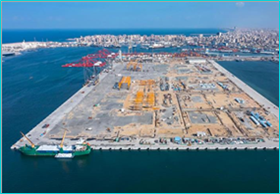
Alexandria Port Mutli-Purpose Terminal And Value-Added Logistic Centre - EIB funded project -, Alexandria, EGYPT

Project description

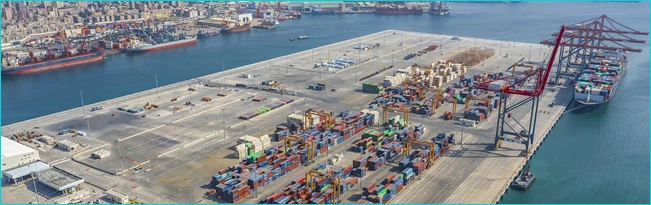
The “Alexandria Port Multi-Purpose Terminal and Value-Added Logistic Centre” is a flagship national initiative designed to transform Alexandria Port into a world-class Mediterranean logistics hub. The project encompasses the development of the Tahya Misr Multipurpose Terminal, equipped to handle diverse cargo types including containers, general cargo, vehicles, and bulk commodities, with an annual capacity reaching up to 2 million tons of general cargo. The terminal adopts advanced automation and digital systems to streamline port operations, significantly reduce ship waiting times, and enhance overall handling efficiency—achieving container processing times as low as 25 minutes.

Strategically positioned within Egypt’s emerging transport network, the project integrates seamlessly with national railways, high-speed connections such as the Ain Sokhna line, and major dry ports including 6th of October. This multimodal connectivity strengthens Egypt’s role in regional and global trade, while supporting the competitiveness of industrial and commercial activities throughout the country.

Complementing the terminal, the project includes the establishment of a value-added logistics centre designed to host ancillary services and light-industrial activities. This zone supports advanced logistics functions, increases supply-chain efficiency, and creates more than 4,500 new job opportunities. In alignment with Egypt’s sustainability goals, the project incorporates environmental management measures to position Alexandria as a leading “green port,” focusing on emissions reduction, cleaner technologies, and enhanced waste management practices.

EcoBusiness Scope

         Conducted a comprehensive scoping environmental study for the Alexandria Port Multi-Purpose Terminal and Value-Added Logistic Centre under a consultancy contract with MTBS (Netherlands), defining the environmental workplan and key assessment priorities.

         Reviewed all project components, layout alternatives, and construction/operation activities to identify potential environmental and social interaction pathways associated with port expansion and logistics zone development.

         Performed an initial baseline screening of environmental conditions—including air quality, marine environment, noise, traffic, and socio-economic aspects—to determine sensitive receptors and data needs for the full assessment.

         Conducted stakeholder identification and mapping, highlighting relevant governmental authorities, port operators, and community representatives to be engaged during subsequent environmental assessment phases.

         Developed a detailed impact identification and significance matrix, outlining anticipated environmental impacts and defining the scope and methodologies for specialized studies such as marine ecology, hydrodynamics, waste management, and climate considerations.

         Prepared the Terms of Reference (ToR) for the full Environmental and Social Impact Assessment (ESIA), ensuring alignment with national regulations and the environmental standards of the European Investment Bank (EIB).

         Submitted the scoping study for formal review, which was subsequently approved by the EIB and the Alexandria Port Authority, confirming the adequacy of the proposed assessment scope and methodology.