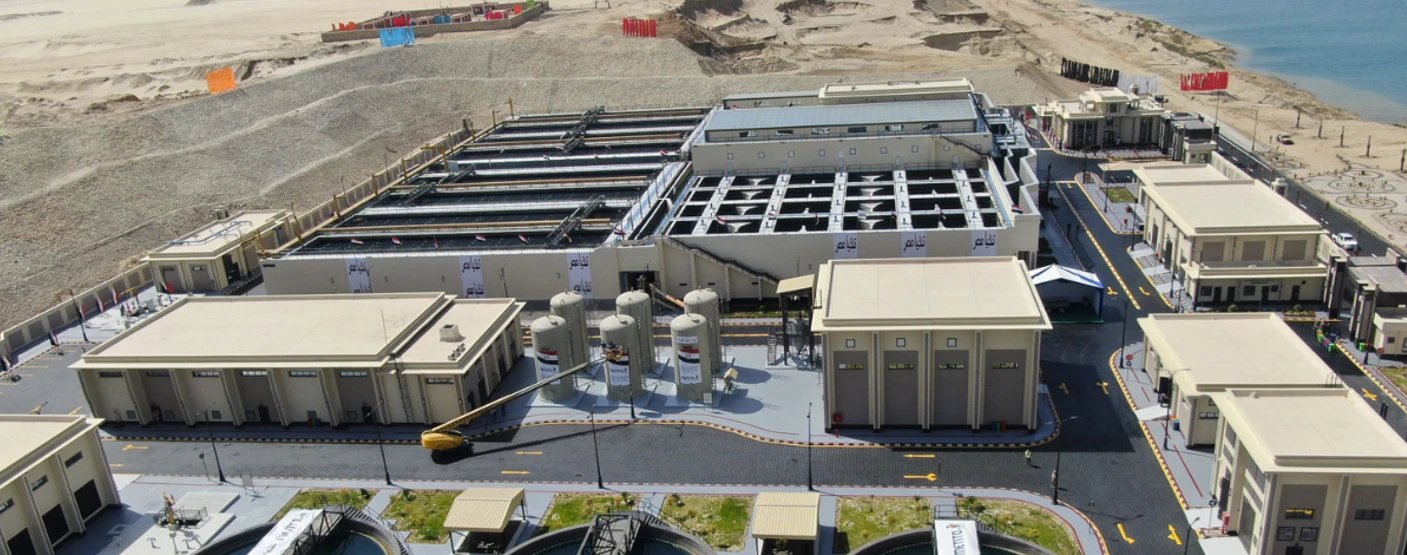
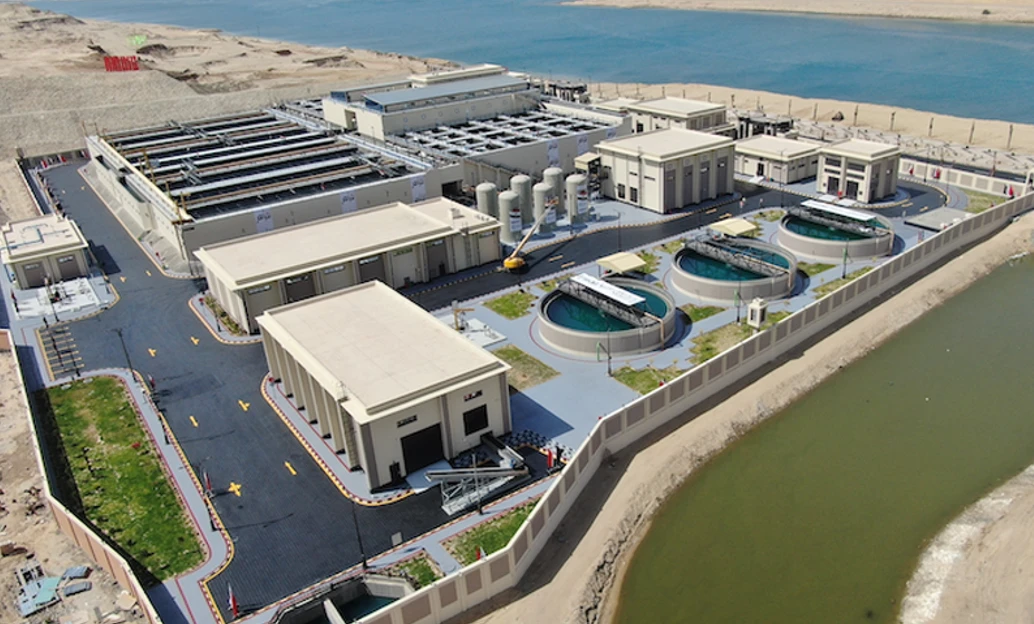
Mahsama Water Treatment Plant in Ismailia Governorate is a major facility dedicated to recovering and reusing agricultural drainage water, with a treatment capacity of one million cubic metres per day. Its overarching purpose is to alleviate national water shortages by converting treated wastewater into a dependable resource for irrigation. The reclaimed water supports the cultivation and rehabilitation of roughly 70,000 acres in the Sinai Peninsula, contributing to wider governmental efforts to expand agricultural activity east of the Suez Canal.
Strategically positioned on the canal’s eastern bank, the plant receives untreated drainage water collected from canals on the western side. This water is conveyed across the Suez Canal through a sequence of pumping stations and the Sarabium siphon before reaching the treatment site. Once delivered, it undergoes a multi-stage purification process incorporating flocculation, sedimentation, precision filtration, and final disinfection to ensure that the output meets irrigation quality standards.
Upon its commissioning in 2020, Mahsama was regarded as the world’s largest agricultural drainage treatment and reuse facility. Its innovative design and operational scale earned international recognition, highlighting its role as a cornerstone project in Egypt’s long-term strategy to optimise water resources, restore arid lands, and enhance sustainable agricultural development in Sinai.
Egyptian Armed Forces Engineering Authority
JV Metito-Hassan Allam
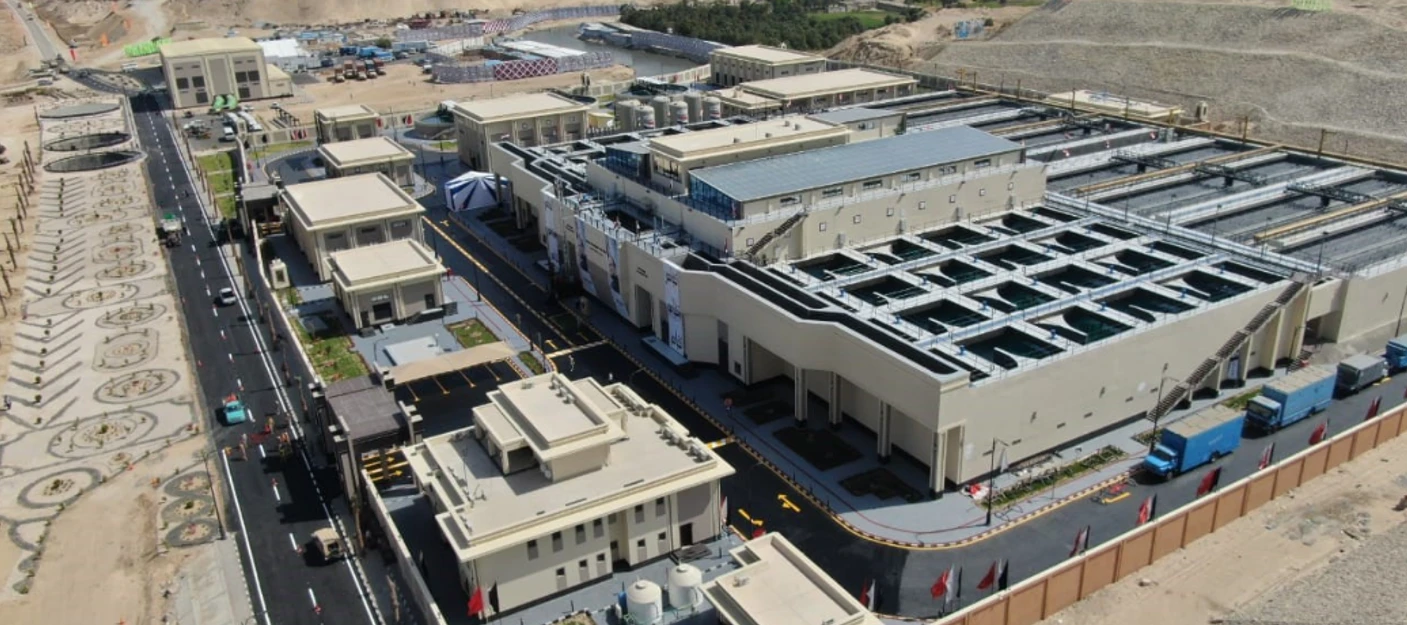
EcoBusiness For Project Management’ scope of work for the Al-Mahsamma Water Treatment Plant began with a full regulatory alignment exercise, during which all relevant national environmental legislation and applicable international standards were reviewed. This phase also included early engagement with the competent authorities to define the project’s permitting pathway, outline the required documentation, and confirm approval procedures. Through structured scoping activities, Ecobusiness identified the key environmental and social receptors, including sensitive ecosystems connected to the wider drainage network and the natural ecology of Al Temsah Lake—an important water body west of the Suez Canal that had long been affected by wastewater disposal. The project’s design and assessment framework incorporated measures to support its ecological preservation.
Following this, Ecobusiness undertook an extensive package of baseline studies combining field surveys and desktop analysis. These investigations covered surface water and hydrological conditions linked to agricultural drains feeding the system, soil quality, air and noise baselines, biodiversity (both terrestrial and aquatic), and socio-economic conditions around the intake, plant site, and irrigation command areas. The datasets and GIS maps generated provided a detailed snapshot of existing environmental conditions, enabling accurate evaluation of potential impacts during construction and operation.
EcoBusiness then performed a comprehensive environmental and social impact assessment. Construction-related impacts such as excavation, emissions, traffic movements, and workforce activities were analysed alongside operational factors including water abstraction, chemical use, sludge generation, energy consumption, and the potential for accidental releases. Social aspects such as land interactions, community considerations, labour conditions, and occupational health and safety were also examined. Cumulative impacts were assessed in the context of the larger agricultural drainage system and the ecological sensitivities of Al Temsah Lake, supporting the plant’s role in protecting this ecosystem by improving water quality and reducing pollutant loads.
Based on these findings, EcoBusiness developed a detailed Environmental and Social Management Plan supported by specialised sub-plans addressing waste and sludge management, water-quality monitoring, biodiversity protection, traffic and transportation measures, occupational health and safety, and emergency preparedness. Additional analyses evaluated the suitability of treated water for agricultural reuse, assessing soil salinity risks, crop compatibility, and long-term monitoring requirements for soils and groundwater.
This phase of the project concluded with EcoBusiness preparing and submitting the full Environmental and Social Impact Assessment (ESIA) to the environmental authority. The team responded to technical comments, provided clarifications, and supported regulatory consultations until all requirements for the permitting stage were successfully fulfilled, ensuring the project proceeded in full compliance with national and international environmental expectations.